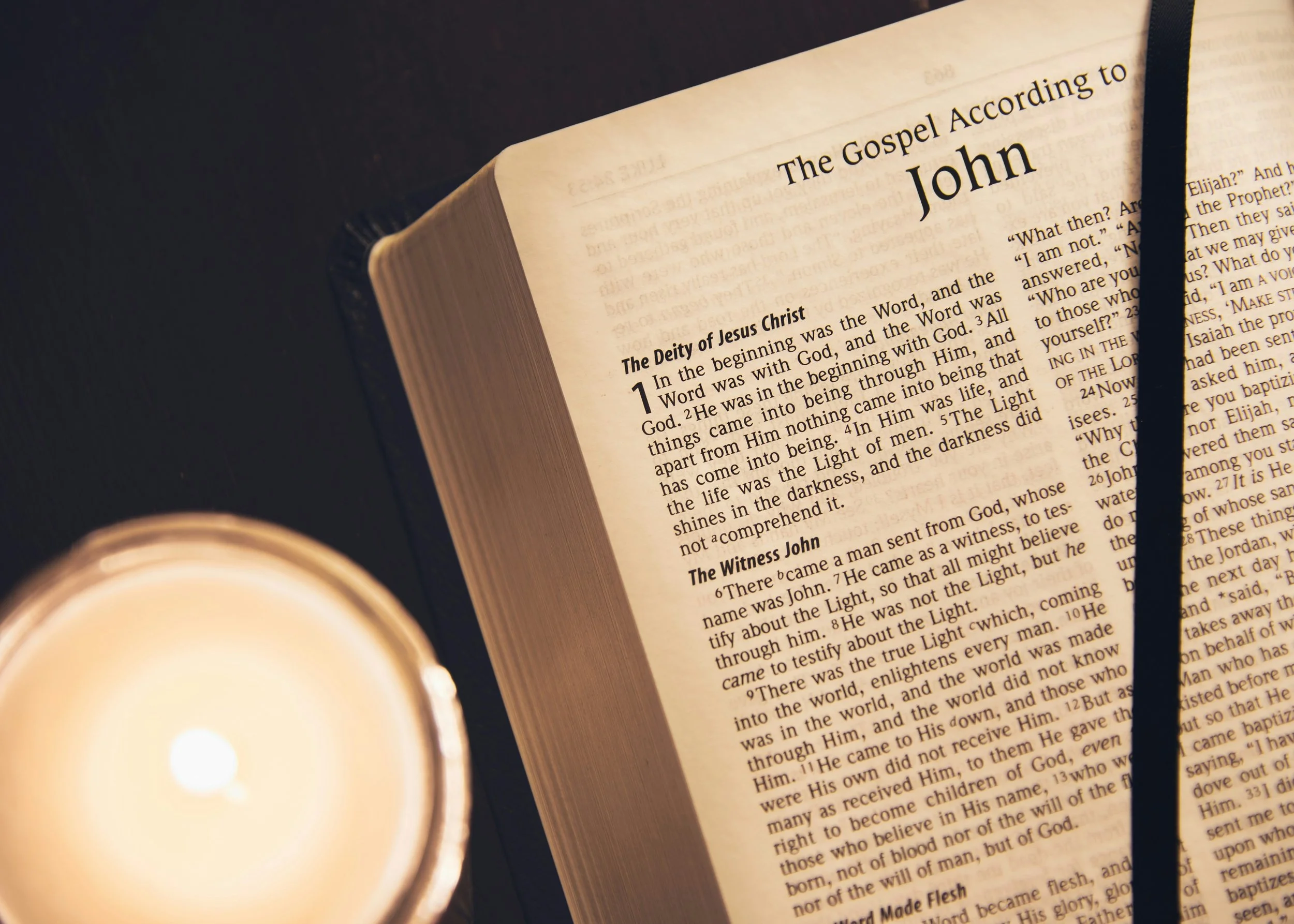
The gospel accounts in the Bible are biographies of sorts, but they are not showing us the growth and development of the main character. Instead, they are trying to convince of something about that person—in this way they are their own genre. The accounts are teaching us about the good news of the work of Jesus.
Perhaps you’ve read the books of Matthew, Mark, Luke, and John devotionally. Maybe you’re like some of our team members and you’re reading them again this year as you read through the Bible. That’s great!
At the same time, there are some distinct features of gospel narrative that can help us understand them well. These include the narrative journey the author takes us through, the Old Testament context, and the subgenres that pop up through the books.* When we want to take more time to study a Gospel, text, we want to hold some of these concepts in mind—paying attention to how God inspired Matthew, Mark, Luke, and John to teach us about Jesus!
Here at BibleEquipping, we use the COMA** process when we think about how to interpret the Bible. There are other titles for this same idea of inductive Bible study. It helps us ask questions of the passage, so we can learn what it intends to teach us. COMA can be simplified to just one or two questions under each heading to a dozen under each!
Here’s our framework for asking questions of a Gospel passage you wanted to study or, as is often the case with women doing training at BibleEquipping, wanted to prepare to teach or lead for a Bible study.
Context
Historical Context: What is happening in the world, reign, and religion? How does the Second Temple Period impact our reading of this text? What concepts, geography, customs, roles, do you need to investigate?
Literary Context: Where is your passage in the plot of the book? How does your passage support the section of the book it is in and lead towards the goal of the whole book? What has happened right before or after?
Biblical Context: What do God’s people know at this time? How does the context of the Old Testament impact how we read this passage and this Gospel book?
Readers Context: Who are you and what lenses do you bring to the text?
Observation
Words and concepts: What words or phrases do you need help defining? What is repeated?
What subgenre is this passage? Is there an embedded genre?
Genre strategies:
If you have a narrative, how do characters, setting, human elements, themes, and comments add to what you see in this passage? What is the climax and resolution of the plot? What do we know about the characters and is there a comparison? Is there a thread or surprise to notice? What do we see in the perspective and pace?
If you have a direct teaching section, how do the arguments form? What do you notice about judgment declared, wisdom stated, or teaching vision?
If you have indirect teaching like a parable, what kind of parable is it? What is the surprise in the story? What is the call or challenge involved? What analogies do you recognize?
Old Testament references: Are there citations, allusions, or echoes in your passage tying it to the Old Testament? If so, how is it being used and what is its original context? Is that context being drawn on by the evangelist?
Meaning
What is the emphasized truth from the text? What do you see from the narrative and from dialog? What do you see from indirect teaching or direct teaching?
What does this text teach us about Jesus and our response to him?
How is this text proleptically taking into account the cross and resurrection?
Intended Response: How would this passage serve the original audience? What was the intended response of the author? What would the prophet want to say to us today? What would he condemn or praise in the church/world?
How is the passage calling for transformation in discipleship?
What is the exegetical outline, textual idea, and theological idea?
Application
How do we respond to Jesus if we believe this passage?
What do we believe about Jesus? How do we worship?
How does it motivate us to love God, serve his church, and make disciples?
Are there implications to examine? If I am one of the disciples of Jesus, what attitudes and ethics does this text call us to?
Phew! That was quite the list! Remember, reading and studying the Bible is a journey. Use the questions you understand here and skip the ones you don’t (Perhaps watch one of our courses or join a cohort. We promise we go over a lot of this in those.) Some of the questions won’t apply to the passage you’re looking at while others will. But this list honors the ways the Gospel accounts were written, slowing us down to see the intentional literary devices and references draw us in to learn.
As you study, may you rejoice in the character of God revealed to us in Jesus. May your need for him be evident. May his provision of grace bring peace. And may his call to discipleship and ethics transform us all.
* In our cohort and course on the Gospels, we talk in detail about the elements of the Gospels as the centrality of Jesus, the Old Testament context, the subgenres mix, the larger narrative journey including threads, and the fact that these are discipleship texts.
**COMA stands for Context, Observation, Meaning, Application. We did not create this outline but borrow it from other authors, including David Helm.